What We Can Control
Why Focusing on What We Can Control Brings Peace
So much of our stress comes from trying to manage things that are simply outside of our control: other people’s choices, the past, the future, the economy, the weather, unexpected change. When we focus our energy there, it often leaves us feeling anxious, helpless, and exhausted. There is another option, one that restores a sense of steadiness and empowerment.
The Cost of Focusing on What We Can’t Control
When we fixate on what we can’t control, our nervous system stays on high alert. Our minds replay “what ifs,” our bodies hold tension, and we may feel stuck in frustration or fear. This isn’t because we’re weak or dramatic, it’s because our brains are wired to seek safety and predictability. When certainty feels threatened, our minds work overtime trying to regain it. The problem is that no amount of worrying can change what’s out of our hands.
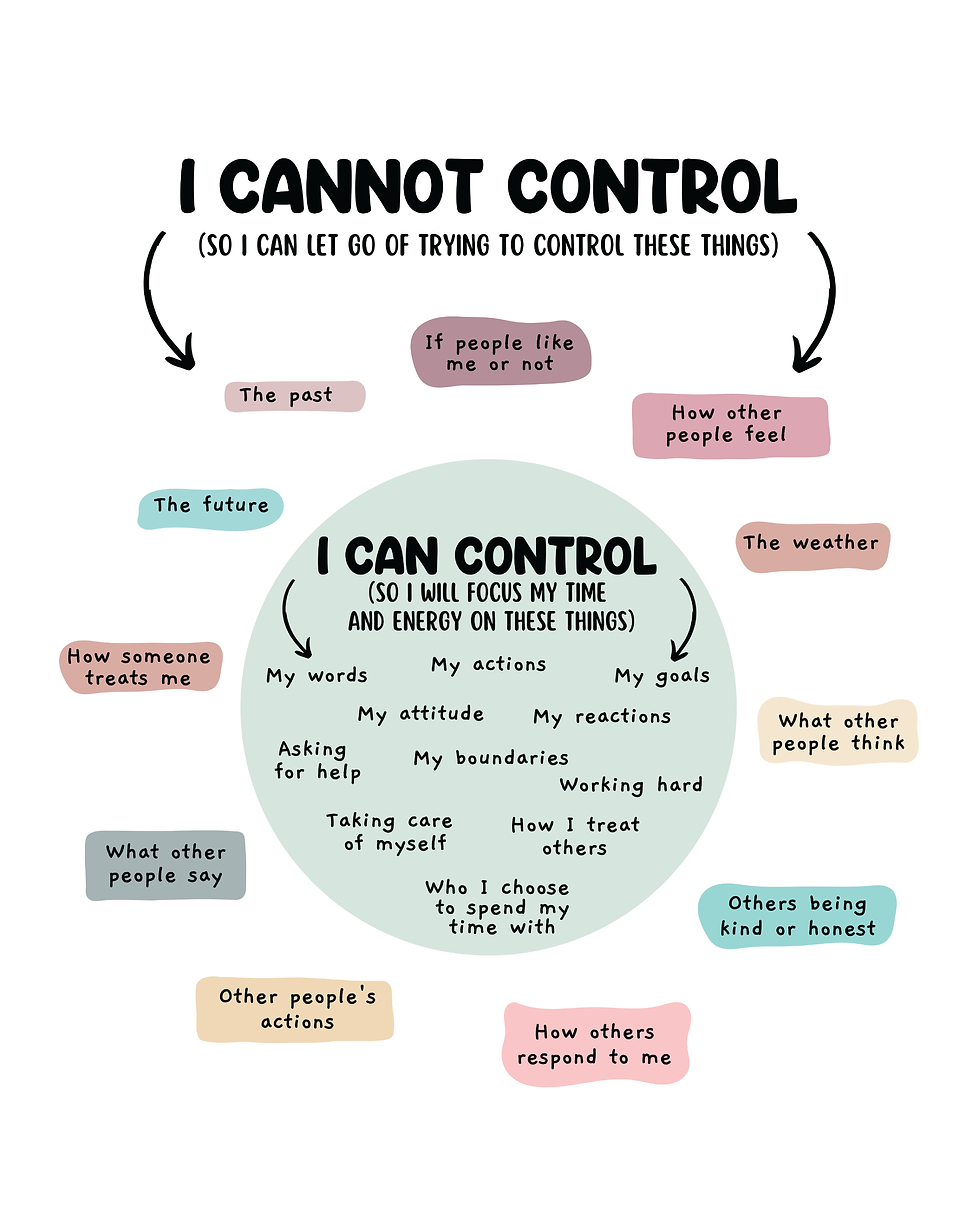
What We Can Control
While we can’t control everything, we always have influence over a few key areas:
Our thoughts and perspective
Our reactions and responses
Our boundaries
Our effort and intentions
How we care for our minds and bodies
Where we place our attention
By concentrating on these areas, we regain a sense of control. This assures us that despite uncertain situations, we still have power.
Control vs. Influence
A helpful reframe is to move from control to influence. You may not be able to control an outcome, but you can influence how you show up. You may not be able to change someone else’s behavior, but you can change how you respond, what you tolerate, and what you need to feel safe. This shift reduces anxiety because it aligns our energy with what can actually create change.
Why This Helps Anxiety and Stress
Focusing on what we can control calms the nervous system. It brings us back into the present moment and out of catastrophic thinking. Instead of spiraling into worst-case scenarios, we anchor ourselves in small, meaningful steps that build confidence and resilience over time. This doesn’t mean we ignore hard realities or pretend everything is okay. It means we choose not to give our peace away to things we cannot change.
A Gentle Practice
When you notice yourself feeling overwhelmed, try asking:
Is this within my control?
If not, what part of this is?
Then shift your attention there, even if it’s something small, like taking a deep breath, setting a boundary, or choosing rest.
Final Thought
Letting go of what we can’t control isn’t giving up it is choosing wisdom. When we focus on what is within our reach, we conserve energy, reduce stress, and create space for clarity and calm. Control isn’t about managing everything around us. It’s about learning to care for ourselves within whatever circumstances we face. And that is where real peace begins.


Comments